Unlocking Efficiency: How to Choose the Best Saw Blades for Every Project
Imagine standing in your workshop, the scent of fresh lumber filling the air, as you prepare to transform raw wood into a beautifully crafted piece. The secret to executing this transformation efficiently lies not just in your skill, but crucially in the precision of your tools—specifically, the saw blades you choose. Every cut from a saw blade influences the quality, speed, and satisfaction derived from your woodworking endeavors.
The world of saw blades is vast and varied, and selecting the perfect blade can significantly uplift the outcome of your project. In this comprehensive guide, we delve into the essentials of choosing the right saw blades, ensuring your projects are not just completed, but masterfully executed with high efficiency and precision.
Diablo D1050X Combination Saw Blade
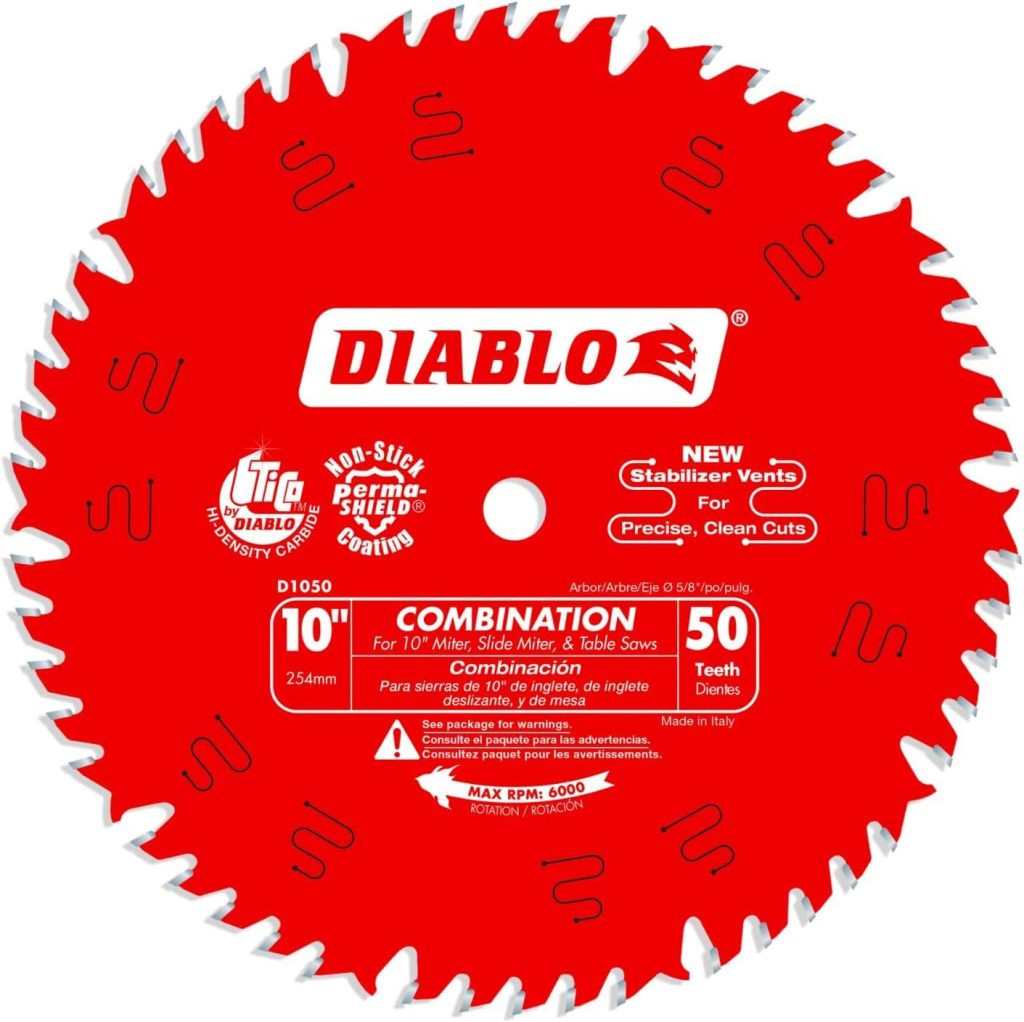
For woodworkers looking for versatility and precision, the Diablo D1050X Combination Saw Blade emerges as a standout choice. Tailored for both ripping and crosscutting, this blade combines functionality with unrivaled cutting finesse.
Pros
- High-quality carbide tips ensure extended longevity
- Perma-SHIELD non-stick coating reduces drag and protects against corrosion
- Stabilizer vents absorb noise and vibration, offering enhanced precision
- Compatible with most table saws and miter saws
- Excellent for both ripping and crosscutting applications
Cons
- Not ideal for cutting non-wood materials
- May require frequent cleaning to maintain optimal performance
Key Features & Benefits
The Diablo D1050X boasts a unique configuration of Hi-Density Carbide with a special Titanium blend, which not only sharpens the cutting edge but significantly prolongs its lifespan compared to traditional blades. Coupled with its thin kerf design, the blade provides a smoother finish while requiring less power—making it particularly suitable for lower-powered saws. The laser-cut stabilizer vents keep the blade cool during operation, thereby preventing warping and ensuring each cut is straight and true.
Moreover, this blade’s versatility allows it to excel in various woodworking tasks without the need for frequent blade changes. Its ability to handle both crosscuts and rip cuts efficiently eliminates the downtime between tasks, streamlining workflow and boosting productivity.
Festool 495377 Fine Tooth Cross-Cut Saw Blade
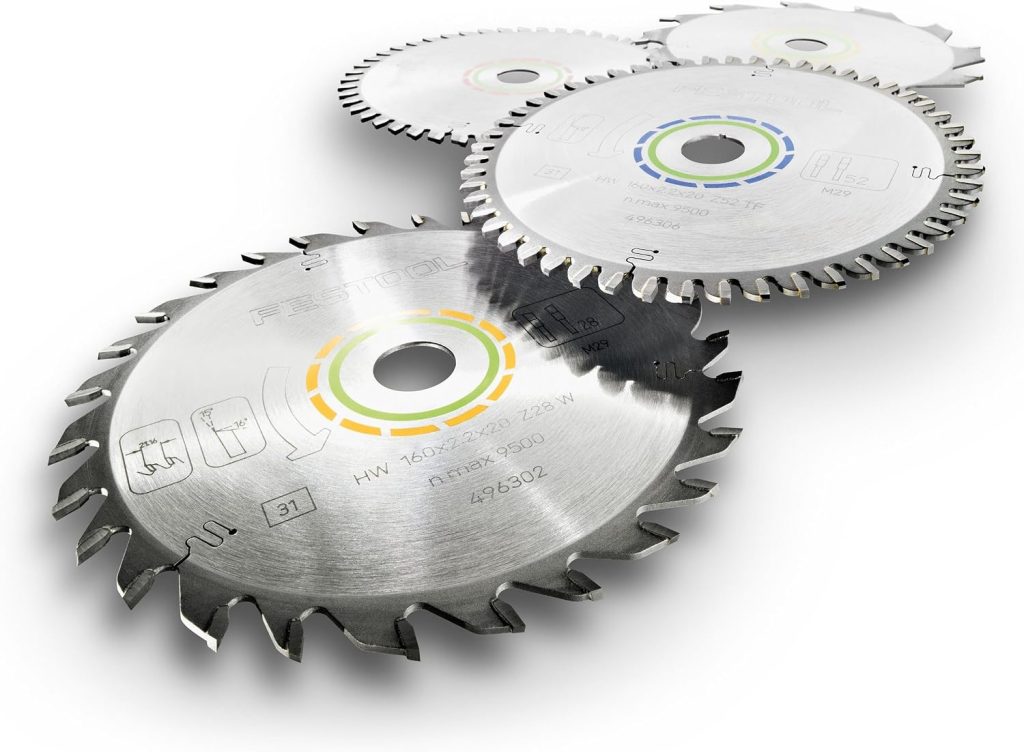
The Festool 495377 is engineered for precision and superior quality cuts, especially when handling delicate materials where precision is paramount.
Pros
- Excellent for veneers and laminates
- Higher tooth count offers incredibly smooth cuts
- Low noise and reduced vibration technology
- Durable body resists heating even under heavy use
- Well suited for precision-demanding tasks
Cons
- Not the best choice for rapid rough cuts
- Higher price point than standard blades
Key Features & Benefits
This blade features 80 fine teeth, which are ideal for cutting operations where the smoothness of the cut surface is crucial, such as when working with veneer or high-quality laminates. Each tooth’s geometry is designed to slice cleanly through material, minimizing tear-out and chipping. The high-grade carbide tips extend the blade’s efficacy and longevity, ensuring that investment in this blade translates into years of reliable use.
Given its specialized application, the Festool 495377 is best utilized in scenarios demanding high precision. It exemplifies superior craftsmanship and, when paired with compatible Festool systems, provides unmatched accuracy—turning complex cutting tasks into seamless operations.
Bosch DCB624 Daredevil Framing Blade
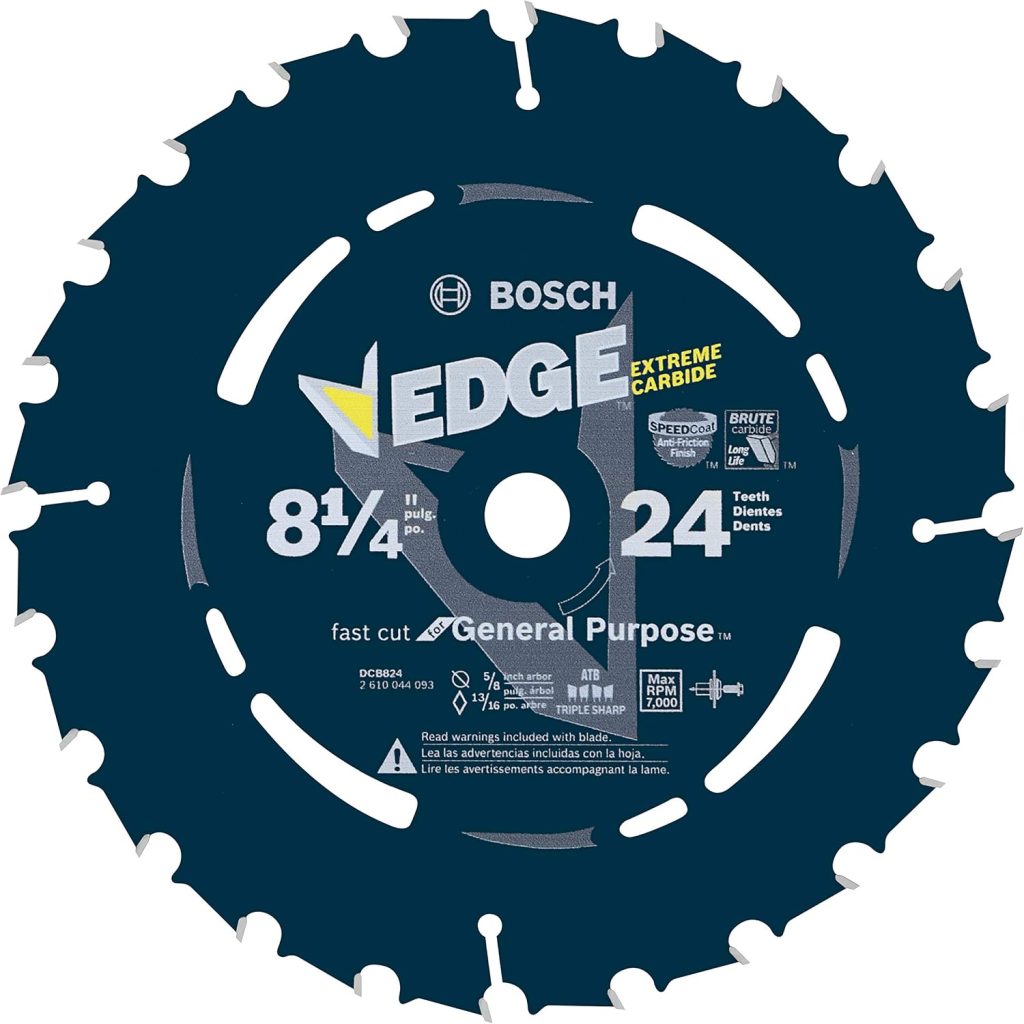
For projects requiring robust and aggressive cuts, the Bosch DCB624 Daredevil Framing Blade offers exemplary performance. Crafted for speed and efficiency, this blade promises to make quick work of even the toughest materials.
Pros
- Designed for faster cutting with minimal effort
- Triple-sharp teeth deliver superb cutting performance
- Blade coating prevents corrosion and reduces friction
- Optimized for use with cordless saws to maximize battery life
- Thick kerf enhances durability for heavy-duty tasks
Cons
- Too coarse for fine, detailed woodworking
- Can be noisy in operation
Key Features & Benefits
The Bosch DCB624 features innovative tooth geometry designed specifically for sped-up cutting, allowing for faster completion of framing and rough-cutting tasks. This blade’s aggressive performance is further enhanced by its extra-hard steel plate and triple-sharp teeth, cutting through nail-embedded wood without hesitation. The inclusion of Bosch’s proprietary Micrograin carbide also maintains sharpness for a longer duration, enabling consistent performance over extended periods.
This blade’s design is particularly advantageous for professionals who require efficiency and durability in their cutting tasks. Whether working on a construction site or in a high-production woodworking facility, the Bosch DCB624 meets the rigorous demands of heavy-duty cutting without compromising speed or quality.
How to Choose the Right Unlocking Efficiency: How to Choose the Best Saw Blades for Every Project
When selecting a saw blade, it’s essential to consider several factors that contribute to the blade’s performance and suitability for specific tasks. These include:
- Material: Assess whether the blade material is suitable for the type of materials you plan to cut.
- Compatibility: Ensure the blade fits your saw model and is appropriate for the kind of cut you need, whether ripping, crosscutting, or a specialized cut like dado.
- Performance: Look for blades that offer the precision, speed, and quality of cut you need.
- Build quality: High-quality construction means better durability and prolonged sharpness.
- Comfort: Consider features that reduce noise and vibration for a more comfortable operational experience.
- Ease of maintenance: Check if the blade is easy to clean and maintain.
- Warranty: A good warranty can protect your investment against defects.
- Budget: Balance cost against your specific needs and how often you will use the blade.
FAQ
1. Can I use a wood saw blade to cut metal?
Using a wood saw blade to cut metal is not advisable as it can quickly dull the blade and may pose a safety hazard. Instead, opt for a blade specifically designed for metal.
2. How often should I replace my saw blade?
Replace your blade when you notice a decline in performance, difficulty in cutting, or visible wear on the teeth. Regular cleaning and proper usage can extend blade life.
3. Are carbide-tipped blades worth the investment?
Carbide-tipped blades are typically more durable and provide cleaner cuts than standard blades. They are a good investment for frequent cutting tasks.
4. How do I prevent my blade from corroding?
Maintain your blade by keeping it clean and dry. Store it in a dry environment and consider using blade oils or coatings for extra protection.
5. What does the term “kerf” refer to in a saw blade?
Kerf refers to the width of the cut made by the blade. Thinner kerf blades remove less material and require less power, ideal for finer cuts.
6. Can I sharpen my saw blade at home?
While it is possible to sharpen your blade at home using the right tools and techniques, professional sharpening is recommended to ensure the best results and preserve blade integrity.
Conclusion
Selecting the right saw blade for your projects is essential for achieving the desired outcomes in your woodworking or construction tasks. By understanding the various types of blades available and what makes each unique, you can enhance both the efficiency and quality of your work. Remember to consider the material, compatibility, and performance needs of your specific projects when choosing a saw blade. With the right blade, each cut you make brings you closer to perfection.
Embrace the journey of creating by starting with the best tools for the job, and watch as your projects come to life with precision and ease.